
Why Recording Yourself Is the Fastest Way to Improve Pitch

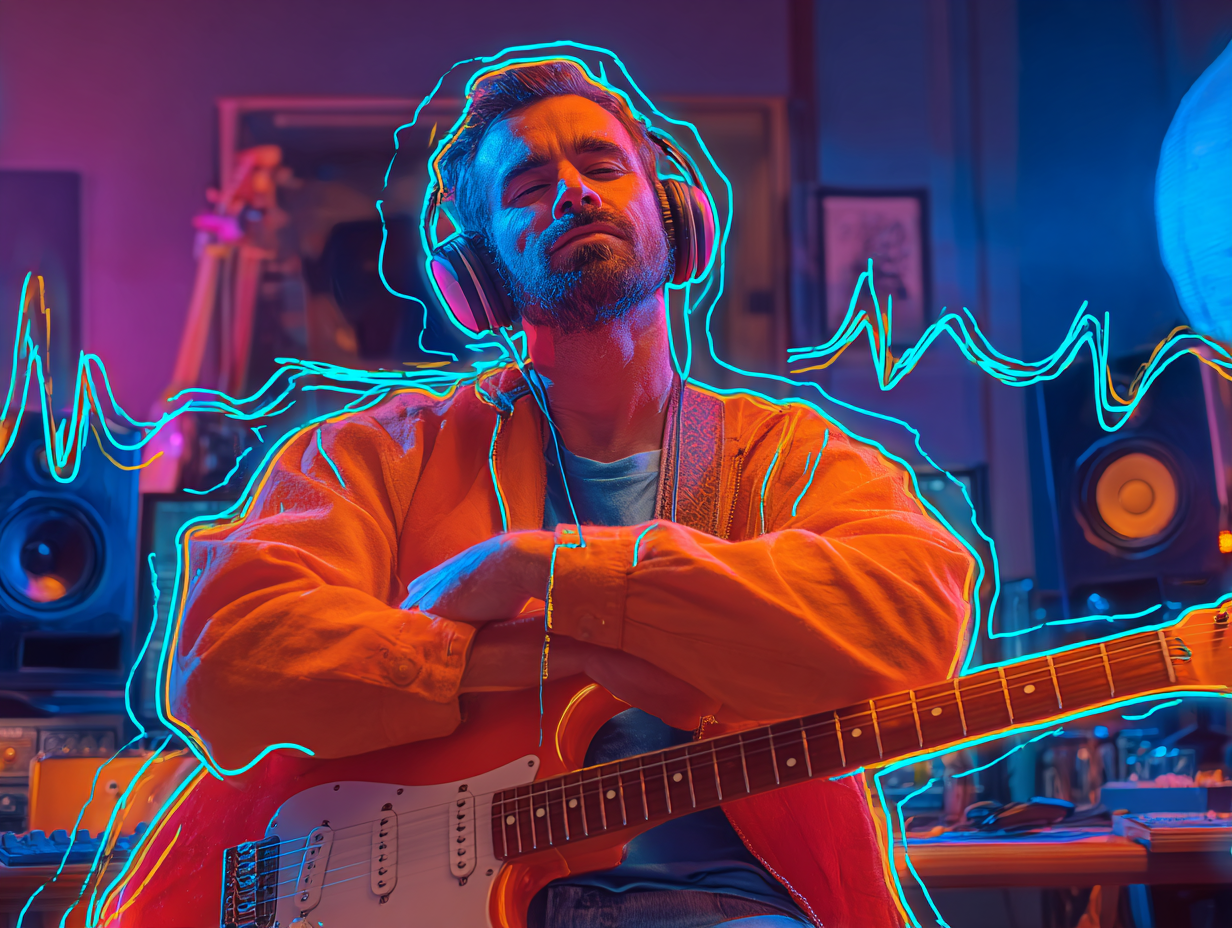
The neuroscience behind why playback beats practice - and how to use this knowledge to accelerate your progress.
Key Takeaways
- Recording engages different brain regions than performing
- Your brain can't objectively assess your pitch while you're singing
- Playback creates a feedback loop essential for motor learning
- Just 10 minutes of recorded practice beats 30 minutes of unrecorded practice
- AI analysis removes the last barrier: subjective listening
The Myth of "Practice Makes Perfect"
We've all heard it: practice makes perfect.
But here's what decades of motor learning research actually shows:
Practice makes permanent. Only perfect practice makes perfect.
If you practice with incorrect pitch and never realize it, you're reinforcing mistakes. Every repetition strengthens the wrong neural pathways.
This is why singers can practice for years and plateau—they're efficiently practicing their bad habits.
The Missing Ingredient: Feedback
Dr. John Hattie's massive meta-analysis of learning factors (2009) found that feedback has one of the largest effect sizes on learning outcomes:
- Effect size of 0.73 (where 0.4 is considered significant)
- Ranked #10 out of 150 factors studied
- More impactful than class size, homework, or summer programs
The problem: For musicians practicing alone, feedback is almost nonexistent.
Recording yourself creates that feedback loop.
Why Your Brain Can't Self-Assess During Performance
The Cognitive Load Problem
When you sing, your brain manages:
- Motor control — Coordinating breath, vocal cords, resonance
- Working memory — Holding lyrics, melody, timing
- Error correction — Making real-time adjustments
- Expression — Adding emotion and dynamics
- Anticipation — Preparing for upcoming passages
With all these processes running, there's no bandwidth left for objective pitch assessment.
Research by Pfordresher & Brown (2007) demonstrated this directly: singers who performed poorly on pitch tasks often had normal pitch perception when listening to others. The deficit was specifically in monitoring their own output.
Bone Conduction Interference
You hear yourself through two channels:
- Air conduction: Sound traveling through air (what others hear)
- Bone conduction: Sound vibrating through your skull (only you hear this)
Bone conduction emphasizes lower frequencies and creates a different tonal impression. This is why your recorded voice sounds "weird"—you're hearing only air conduction for the first time.
More importantly: bone conduction can mask subtle pitch variations that are obvious in recordings.
The Forward Model
Your brain has predictive mechanisms that anticipate what you're about to hear based on your motor commands. This "forward model" can override actual perception.
Translation: Your brain hears what it expects to hear, not what you actually sang.
What Happens When You Listen Back
When you listen to a recording, everything changes:
Different Brain Mode
Performance mode:
- Motor cortex highly active
- Auditory processing partially suppressed
- Stress hormones potentially elevated
- Divided attention
Listening mode:
- Motor cortex at rest
- Full auditory attention available
- Critical evaluation circuits engaged
- Focused attention
These are fundamentally different neural states.
Objective Perspective
When listening back, you become your own audience:
- No bone conduction interference
- No motor tasks competing for attention
- No forward model overriding perception
- Same audio that others would hear
Error Detection Activation
Research shows that error detection regions of the brain are more active during playback than during performance. You literally catch mistakes that were invisible while singing.
The Science of Motor Learning
Fitts and Posner's Three Stages (1967)
Motor learning (including singing) progresses through stages:
- Cognitive Stage: Understand what to do, think through each action
- Associative Stage: Refine movements, reduce errors
- Autonomous Stage: Perform automatically, minimal conscious control
Key insight: Progress from stage 2 to stage 3 requires error correction feedback. Without it, you get stuck.
Recording provides that feedback.
Schmidt's Schema Theory (1975)
Motor skills are learned through developing "schemas"—generalized rules for movement.
Schema development requires:
- Initial conditions (what you attempted)
- Movement parameters (how you executed)
- Outcome (what happened)
- Sensory consequences (what you perceived)
Recording provides the outcome and sensory consequences that are missing from live practice.
Why Recorded Practice Beats Unrecorded Practice
The Math of Feedback Loops
Unrecorded practice:
- Attempt → (no clear feedback) → Attempt → (no clear feedback) → ...
- Each repetition might reinforce mistakes
- Progress is random and slow
Recorded practice:
- Attempt → Record → Playback → Identify issue → Targeted fix → Attempt → Record → ...
- Each repetition addresses specific problems
- Progress is systematic and fast
Research Evidence
Hewitt (2001) studied students who practiced with and without recordings:
- 40% faster improvement in the recording group
- Higher accuracy at the end of the study
- Better retention of learned skills
The recording group spent the same amount of time practicing—they just practiced smarter.
From Recording to Analysis: The Final Step
Recording alone is powerful. But it has a limitation: you're still subjectively assessing your pitch.
You might listen back and think:
- "That sounded pretty good" (but was it really?)
- "Something was off" (but what exactly?)
- "I think I was flat" (but how flat? Which notes?)
Where AI Analysis Changes the Game
Performance Coach removes subjectivity entirely:
| Traditional Playback | AI-Analyzed Playback |
|---|---|
| "That sounded okay" | "You were 76% in-key" |
| "Something was off" | "You went 35 cents flat on measure 4, beat 2" |
| "I think the chorus was better" | "Chorus: 82% vs. Verse: 71%" |
This level of precision was previously available only in professional studios with engineers giving feedback. Now it's available to anyone with a smartphone.
How to Implement Recording-Based Practice
The Daily Recording Protocol
Time: 15-20 minutes
Equipment: Any smartphone
- Warm up (5 minutes)
- Record your target section (2 minutes)
- Upload and analyze (3 minutes)
- Practice the specific issues identified (5-8 minutes)
- Re-record and compare (2 minutes)
That's one complete feedback loop. Do this daily and you'll progress faster than practicing an hour without recording.
Weekly Structure
| Day | Recording Focus |
|---|---|
| Mon | Verse 1 of current song |
| Tue | Chorus micro-lesson |
| Wed | Bridge or problem section |
| Thu | Full song run-through |
| Fri | Re-record Mon's section, compare |
What to Do With Your Recordings
- Keep them organized — Name files with date, song, section
- Track your scores — Log % in-key over time
- Compare across weeks — Evidence of progress
- Save your "before" recordings — Motivation gold
Overcoming Recording Resistance
"I hate hearing myself"
Everyone does at first. The discomfort comes from bone conduction vs. air conduction differences—you sound "wrong" because it's unfamiliar, not because you're bad.
Solution: Record daily for two weeks. By week 2, your recorded voice sounds normal.
"I don't have good equipment"
You don't need it. Phone recordings capture pitch and timing accurately. You're not making an album—you're analyzing your performance.
"I don't have time"
Recording-based practice is more efficient, not more time-consuming. 15 minutes with recording beats 30 minutes without.
"I'd rather just enjoy playing"
That's valid! But if your goal is improvement, you need feedback. Reserve some practice time for serious work.
What the Pros Say
Ed Sheeran
"I recorded everything when I was learning. I'd listen back and cringe, but that cringe taught me what to fix."
Yo-Yo Ma
"The recording studio is the harshest teacher. It hears everything you missed."
Quincy Jones
"The difference between a good musician and a great one is how honest they are with themselves. Recording makes you honest."
Your Action Step
The fastest way to improve your pitch is simple:
- Record yourself singing something right now
- Listen back
- Notice what you didn't notice while singing
Then take it further:
Upload Your Recording and Get Your Exact % In-Key Score →
3 free coaching sessions every month. Remove the guesswork from your practice.
References
-
Hattie, J., & Timperley, H. (2007). The power of feedback. Review of Educational Research, 77(1), 81–112.
-
Pfordresher, P. Q., & Brown, S. (2007). Poor-pitch singing in the absence of "tone deafness." Music Perception, 25(2), 95–115.
-
Hewitt, M. P. (2001). The effects of modeling, self-evaluation, and self-listening on junior high instrumentalists' music performance and practice attitude. Journal of Research in Music Education, 49(4), 307–322.
-
Fitts, P. M., & Posner, M. I. (1967). Human Performance. Brooks/Cole.
-
Schmidt, R. A. (1975). A schema theory of discrete motor skill learning. Psychological Review, 82(4), 225–260.
Keywords: why record yourself singing, recording for practice, self-recording pitch improvement, playback analysis music, feedback loop practice, motor learning music


